Content design · Information architecture · Print
Eat Different:
designing for real energy.
A cookbook for neurodivergent adults, with energy-based choices, sensory swaps and easier options built into the recipe system.
- Role
- Author · Content designer · Creative director
- Scope
- 60 recipes · Three editions
- Year
- 2026
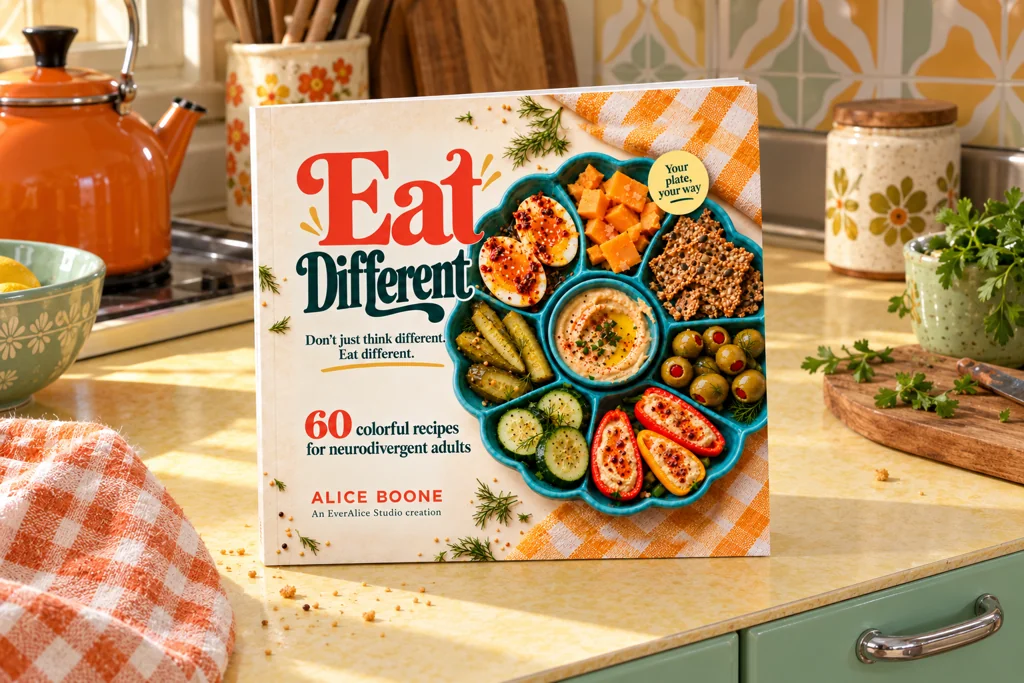
The problem.
Most cookbooks quietly assume a steady cook: someone with the same energy every day, who doesn't mind surprises in texture, and who can follow a long recipe start to finish. For a lot of neurodivergent adults, the hard part of cooking happens before the stove. It's choosing what to make, guessing how a dish will feel to eat, and judging whether there's enough energy to finish it.
So the design question wasn't “which recipes?” It was “how does someone decide, quickly, on a day when deciding is the hard part?”
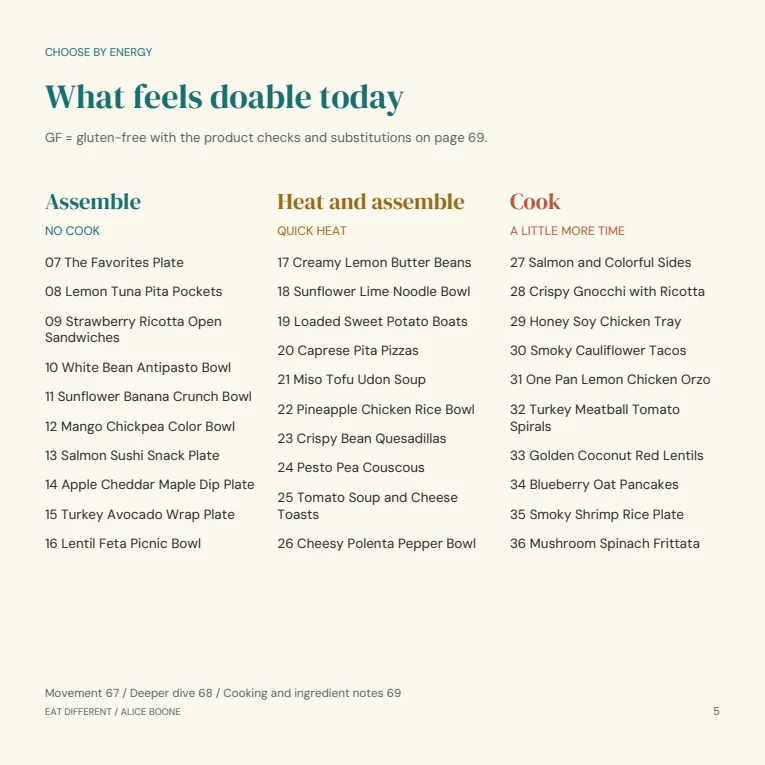
Start with energy.
The “Find your energy” finder gives readers a way in: no-cook plates, quick meals, cook-day dinners or something sweet. It turns the starting point into a choice about today, rather than another long list to work through.
A pattern readers can come back to.
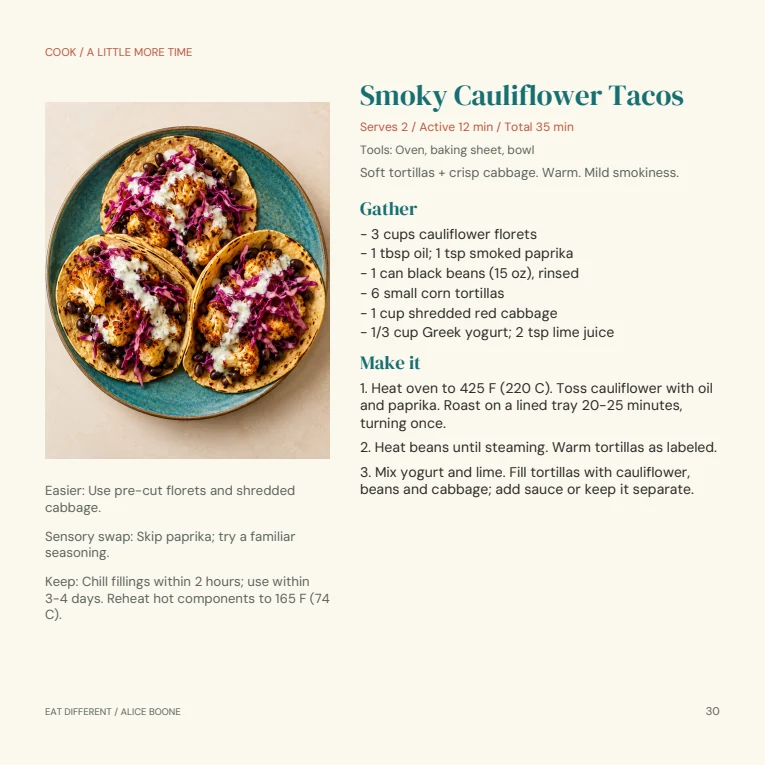
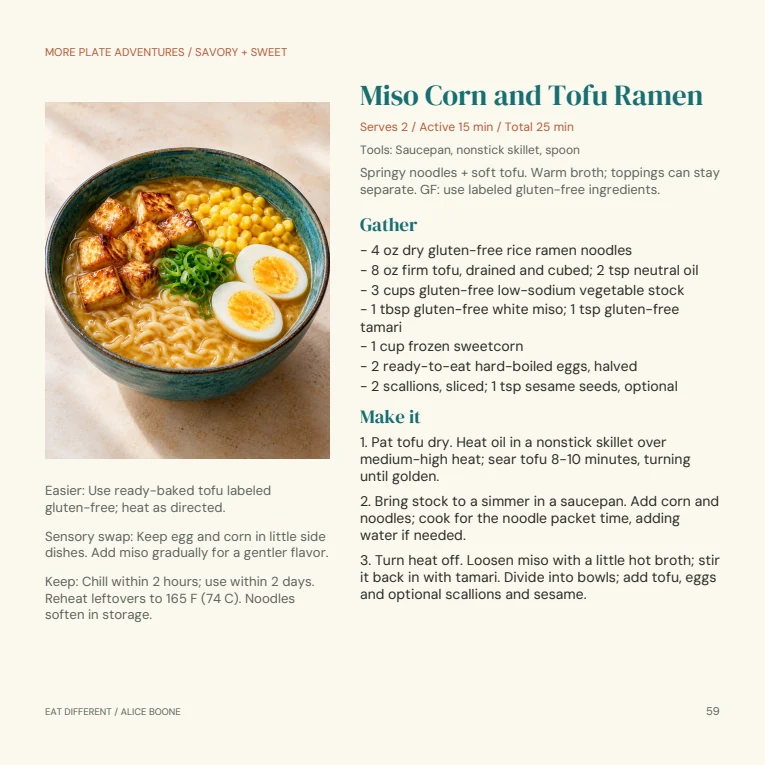
The recipe system uses recurring easier options and sensory swaps. Familiar blocks and a predictable layout are intended to make each page easier to find a way through.
Convenience ingredients are welcome. Sauce can stay on the side. The easier option belongs in the recipe, where someone is making the decision.
Familiar first. New as an option.
Repeating a trusted favorite is treated as success, not a rut. Variety can be one small change, chosen when the reader feels like it. Familiarity and curiosity both have a place at the table.
Important information, easy to find.
The practical kitchen notes bring cooking, storage, label-reading and allergy guidance together. Recipe-level guidance and GF marks sit alongside the recipes where they apply, and the book page explains the editions and ingredient information before someone buys.
Look inside before deciding.
The book page shows actual spreads, and the free sampler includes the cover, both energy finders and four complete recipes. It downloads without a signup.
How it was made.
I built the book's structure and files with EverAlice AI's Book Builder, alongside AI-assisted creative work, other editing tools and hands-on layout and print preparation.
The book-building walkthrough follows the work from choosing a format and creating the recipe system through exporting, cover preparation and proofing.
The same thinking, on paper.
Start from the reader's situation. Make the pattern predictable. Put important information where it can be found. Leave room for choice. These are the same principles I bring to product content, applied to a book someone can hold.