Tteokbokki with Sweet and Spicy Gochujang Sauce
These Korean rice cakes are chewy all the way through. The sweet and spicy sauce should hang on to them when you lift one out of the pan.
A recipe from Eat Different: Safe Foods for Neurodivergent Minds, my cookbook in progress.
Jump to recipe ↓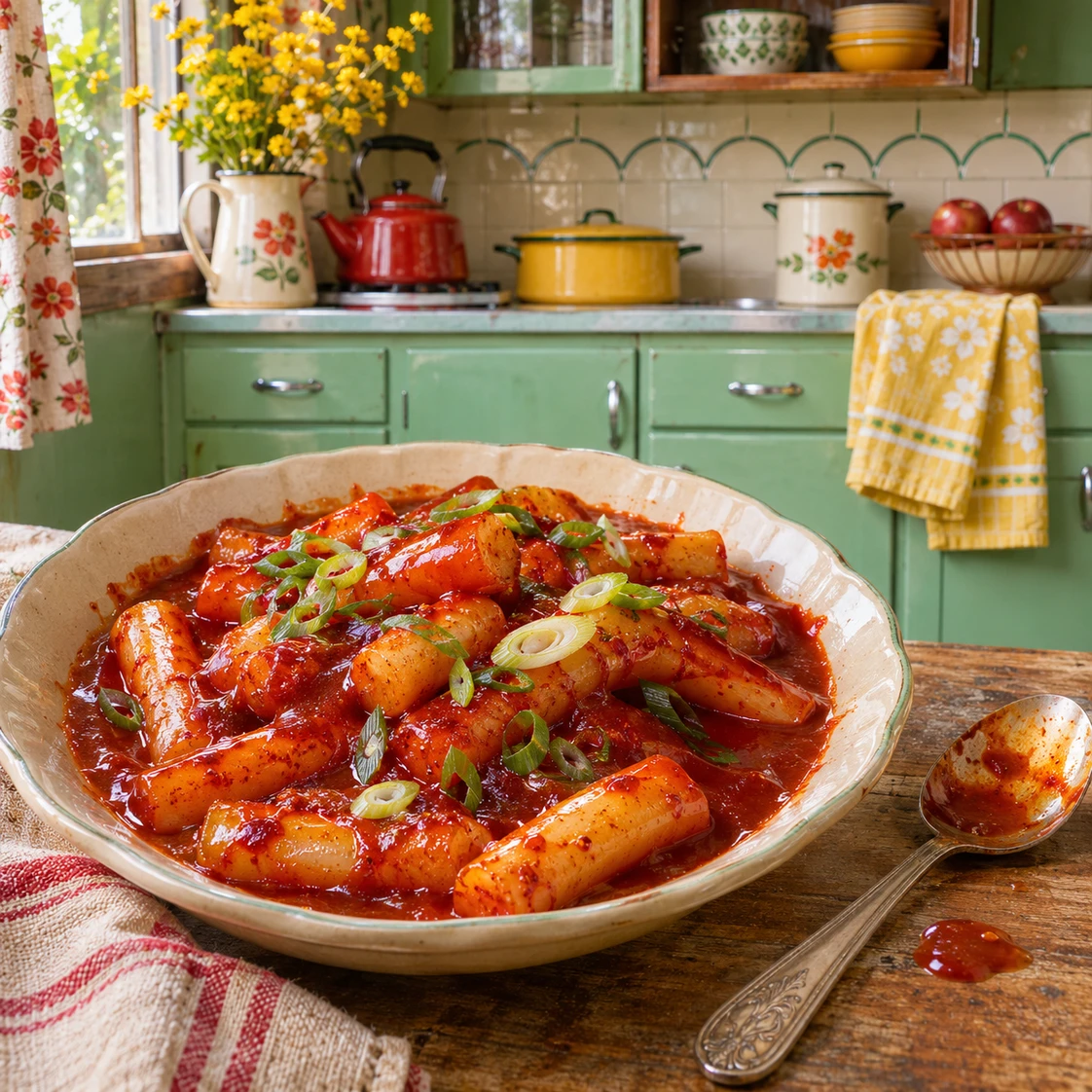
The recipe · 2 servings
Tteokbokki with Sweet and Spicy Gochujang Sauce
From my cookbook in progress, Eat Different: Safe Foods for Neurodivergent Minds.
Cooking battery 2/3. Steady attention.
- Hands-on
- 10 min
- Total
- 28 min
- Makes
- 2 servings
Times are estimates. Hands-on time is included in the total.
Tools: Wide skillet, spoon
Texture and flavor: These Korean rice cakes are chewy all the way through. The sweet and spicy sauce should hang on to them when you lift one out of the pan.
Ingredients
- 1 lb Korean cylinder rice cakes
- 2 cups unsalted anchovy or vegetable stock
- 2 tbsp gochujang
- 1 tbsp sugar
- 2 tsp soy sauce
- 1 sliced scallion
How to make it
- Prepare the rice cakes according to their package if they need soaking.
- Bring stock, gochujang, sugar and soy sauce to a simmer in a wide skillet. Add rice cakes. Simmer and stir often until the cakes are chewy all the way through and the sauce clings, 12–18 minutes. Add a splash of water if it thickens too soon.
- Scatter scallion over the top or serve it separately.
Make it work for you
Easier: Use refrigerated rice cakes that don’t need soaking if available.
Sensory swap: For a gentler first batch, start with 1 tablespoon gochujang. The rice cakes are meant to be chewy.
Storage: Refrigerate leftovers within 2 hours in a covered container. Use within 3–4 days.
Ingredients and allergens: Soy. Gochujang may contain wheat, and anchovy stock contains fish.
At the counter
Rice cakes vary by brand. Check the package for soaking directions, then stir them often so the sauce thickens around them without catching on the pan.
More food that fits your day
Find your next doable meal in Eat Different.
My first Eat Different cookbook brings together 60 recipes for neurodivergent adults. Start with a meal that fits your energy, then use the texture notes and swaps to make it work for you.
See the book and editions →Try another recipe
Read about safe foods and changing food preferences.
Food handling: USDA: Handling leftovers safely.